

Process Heating and Cooling
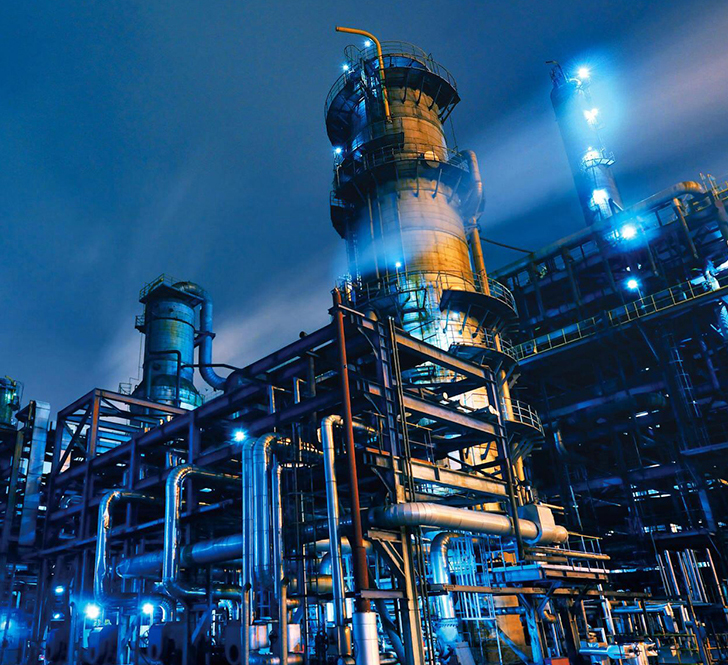
The chemical industry heavily relies on precise temperature control, with processes often requiring both heating and cooling across a wide range, from -120 °C to +150 °C. While a heat transfer fluid typically operates at a single temperature for a given application, some processes demand the same fluid to function at varying temperatures. A good example is reaction processes where cooling is crucial during an exothermic reaction, followed by heating to facilitate water removal during crystallization.
Process heating and cooling systems use a heater or chiller with fluids like thermal oil, water, glycol, or silicon to regulate temperature. The chosen fluid is continuously circulated, indirectly transferring heat to various process systems, machinery, and materials. This indirect heat transfer is a key advantage over direct-fired systems, as the heater never directly contacts the heated object.
These systems operate with two distinct loops. The primary loop maintains a consistent flow rate and temperature of the thermal fluid for all consumers, regardless of the fluid’s return temperature. It consists of the heater, drain and expansion tanks, and circulation pumps. Secondary loops, which can be multiple, draw thermal energy from the primary loop to meet the specific flow rate and temperature demands of individual consumers.


